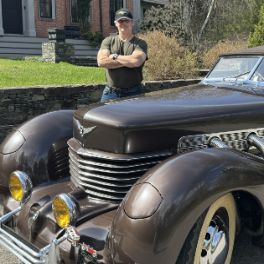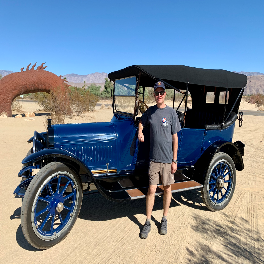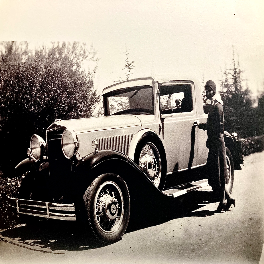


Hey Chris, I wish I could help but I know very little about early cars. Well at least earlier than 1929. Looking forward to following along with your project and I'm sure the next guy will appreciate any think you learn from the process. Car looks great btw.

Manged to remove the transmission today. To do so I also needed to remove the exhaust pipe and muffler to provide enough clearance to pull the transmission back. Started cleaning things up today and gathering my notes. The assembly of clutch discs and the pressure plate seem like they are threaded on to the main shaft. I'll have to figure out how to remove this so I can get the plates relined.


Three speed, 3-55 mph in high gear, and my car will still do it.

Update on my progress:
I managed to get the whole clutch assembly out of the transmission and completely taken apart. There are six driving discs that have clutch facing riveted to them on both sides. In my case most of the clutch facing was loose or ready to fall off, in some areas it had already escaped the disc it was attached to. After cleaning up all the parts and removing the brass rivets from the driving discs I took all six down to Long Beach CA where Friction Materials Co is located. They have been around since 1956 and like do most of the clutch relining on cars of this vintage since they still have the tools and know how. Great people, I highly recommend them if you need clutch or brake shoe relining.
After a short two weeks the driving discs were better than new. I took that time to get the rest of my clutch parts ready to assemble. The design of this multi-disc cutch has an outer spider that bolts to the flywheel and an inner spider that the driving discs are keyed to. In between each driving disc is a steel disc, called a driven disc. The Driven discs are keyed to the outer spider, there are seven of these. All thirteen discs are slid onto the inner spider and the outer spider is slid on over them. The pressure plate compresses again the outer lip of the inner spider to sandwich the discs all together to transmit power through the engine. This whole clutch assembly is then pressed onto the input shaft of the transmission. The tricky part was getting the clutch spring installed, but I have that figured out now.
I am now at the point where the clutch assembly is ready to press onto the keyed input shaft. Making good progress now. When I am all done I'll do a write up for the website so the next person servicing a clutch on their Model 14, 15, or 15B will have some instructions to follow.
https://frictionmaterialslb.com

Nice work. Are you going to have to wrestle that transmission into a press to mount the clutch assembly? Sure is an odd way that they chose to mount it.

I don’t think so. I spent some time cleaning up the input shaft and the ID of the inner spider. I hope to be able to carefully press it on with the appropriate mallet.
To join in the conversation, you must be a club member.
You’re welcome to read and like every post. Members can reply and start topics of their own.